Johana Altar: "The Legend"
(Size 150 / Three-Way Opening)
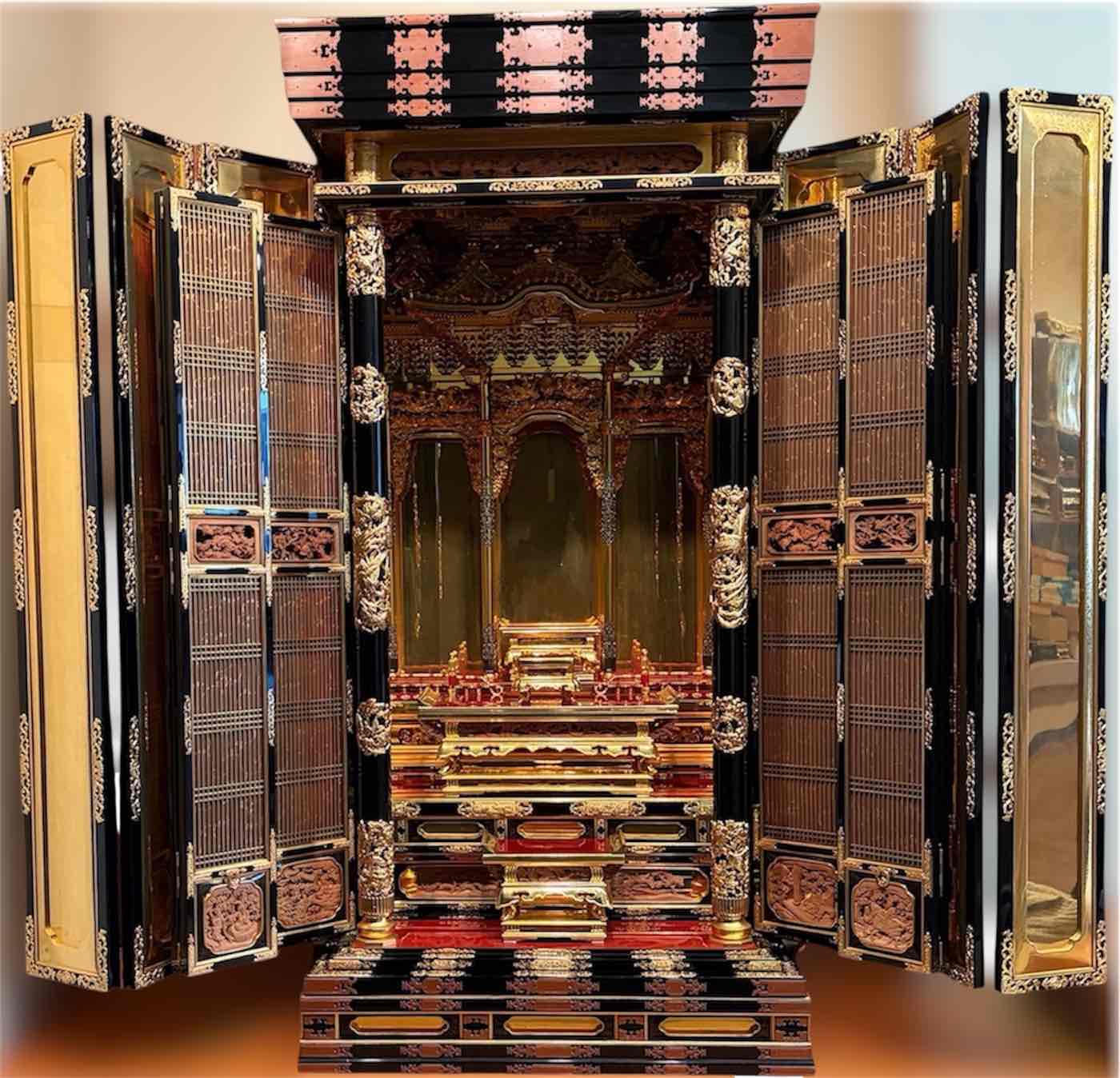
Traditional Johana Altar
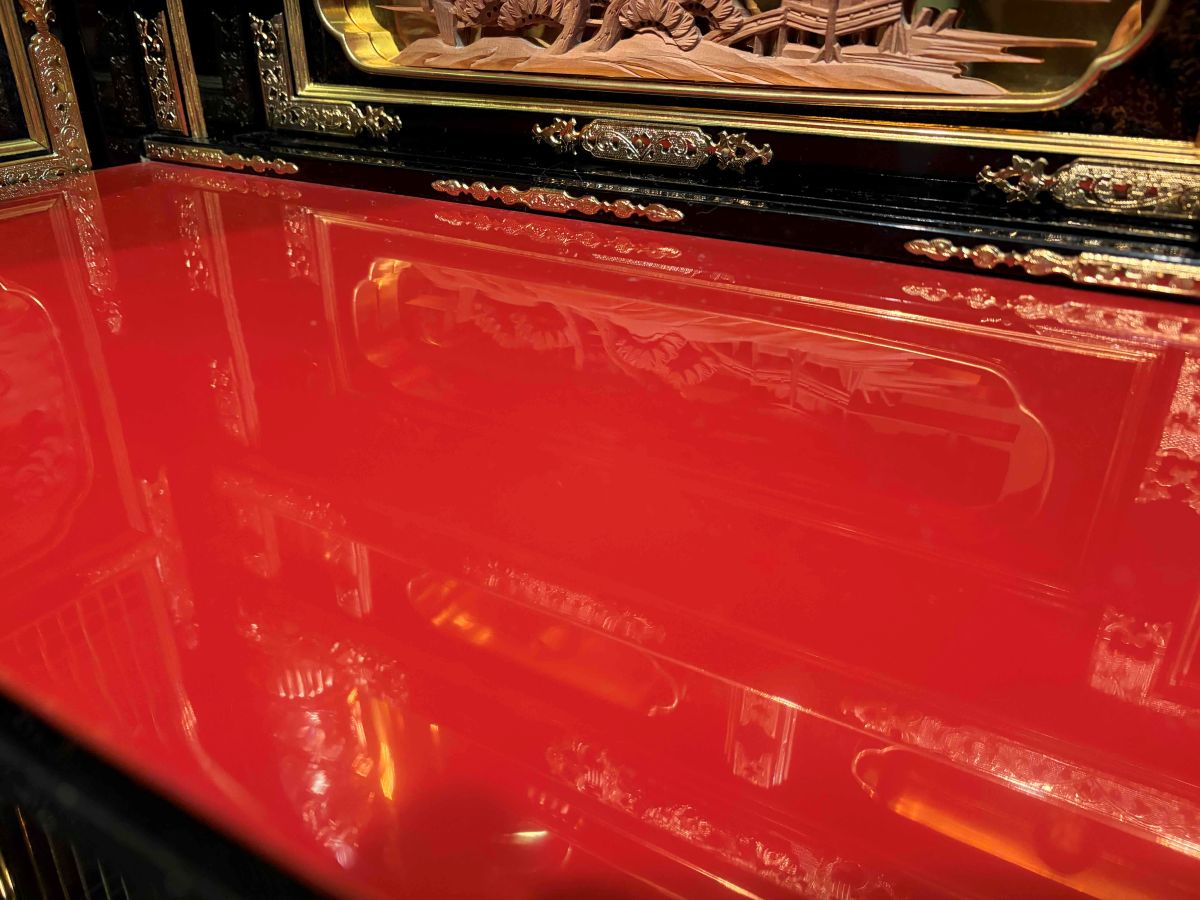
The Profound Luster: "Roiro-migaki" Polishing
The pinnacle of lacquerware, creating a mirror-like brilliance. This process involves charcoal-burnishing the layered lacquer, rubbing in raw lacquer, and repeating the polishing process numerous times. The deep, dark glow born from "Dozuri" (hand-polishing with fingertips and palms) boasts a beauty so clear it reflects your own face.
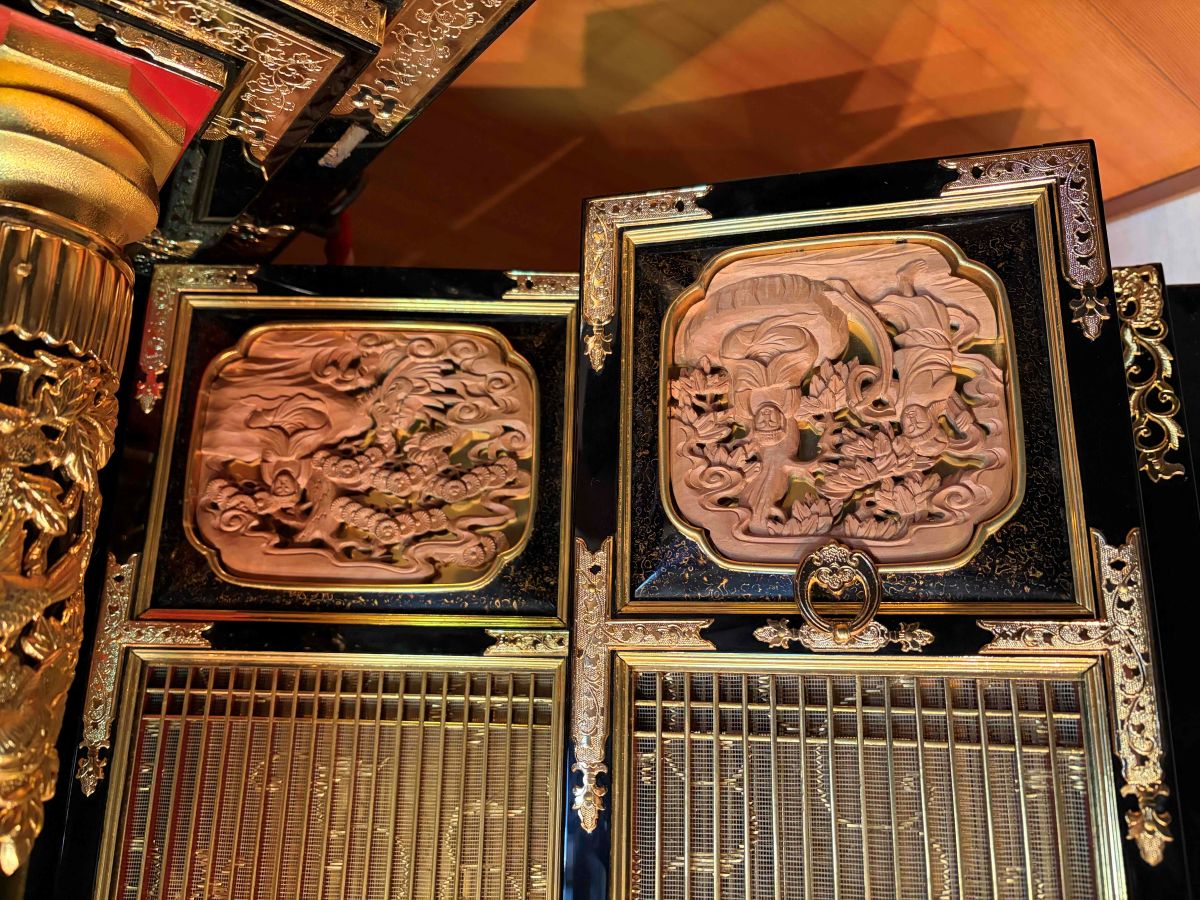
The Sacred Fragrance: Carvings in "Sandalwood"
Instead of the commonly used camphor wood, we generously use rare, high-grade fragrant "Sandalwood" (Byakudan). In this exceptionally hard material, artisans have meticulously carved scenes of Buddhist training and "Shikunshi" (the four noble plants) motifs. Over time, the wood matures into a rich amber hue, enveloping the place of prayer in a noble fragrance.
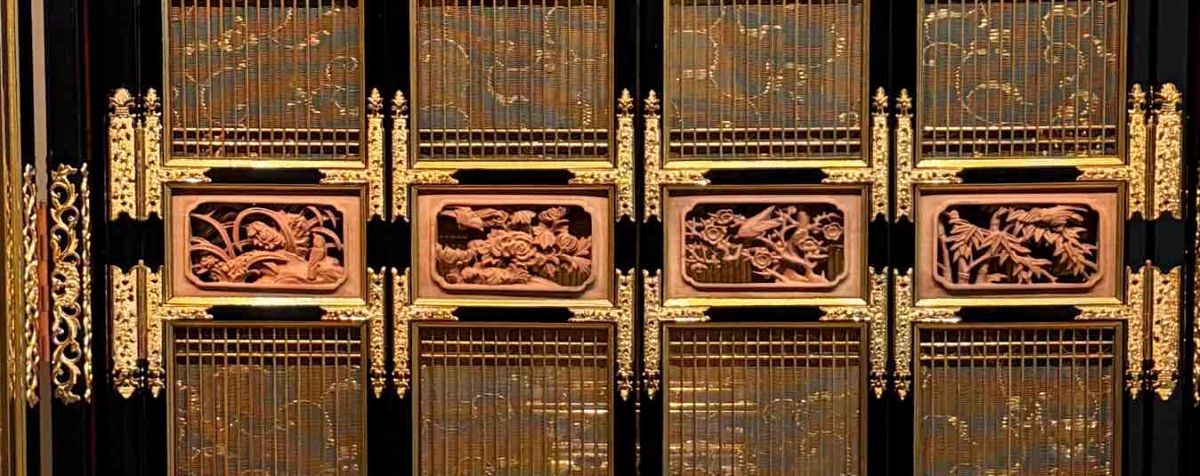
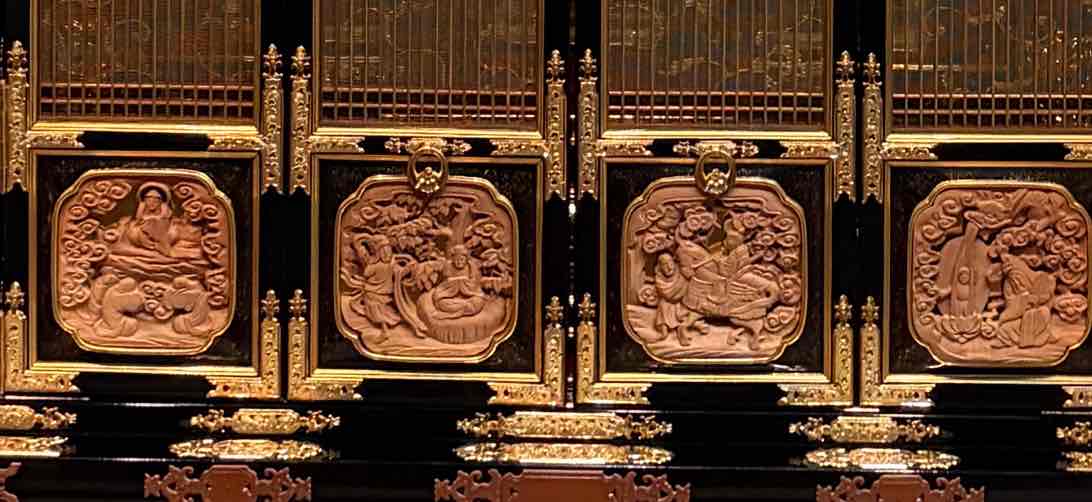
Sandalwood Carvings on the Lower Panels
When the outer doors are opened, the inner doors reveal exquisite sandalwood carvings on the lower panels (Koshi).

Breathtaking Artistry: "Matsuyani-uchidashi" Metalwork
Not made from molds, these are masterful hand-hammered metal fittings by a legendary late artisan. Metals fixed on a base of pine resin (Matsuyani) are struck from the back tens of thousands of times to create an overwhelming sense of three-dimensionality. This national-treasure-class technique shares the same roots as the decorations on the Johana Hikiyama festival floats.
Refining Time: The "Mushikui-nuri" Technique
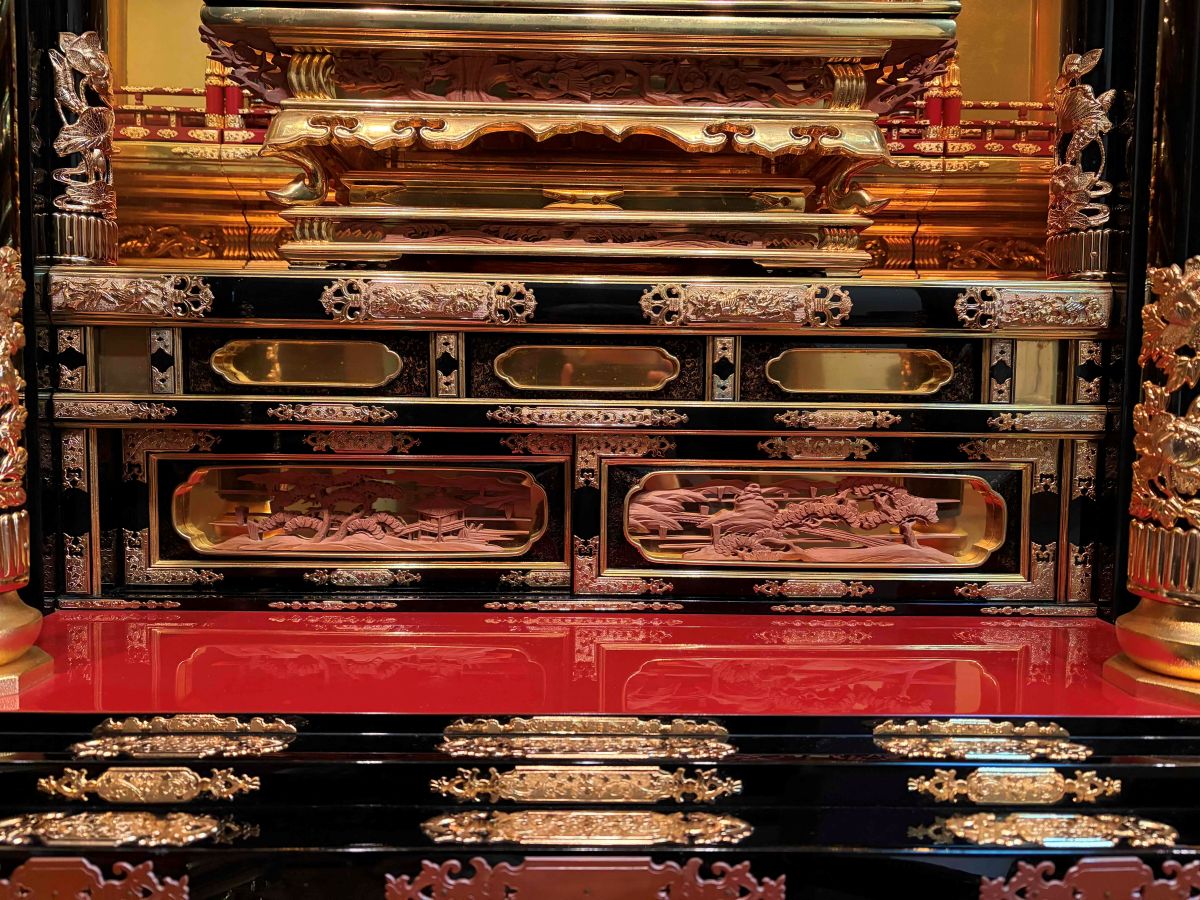
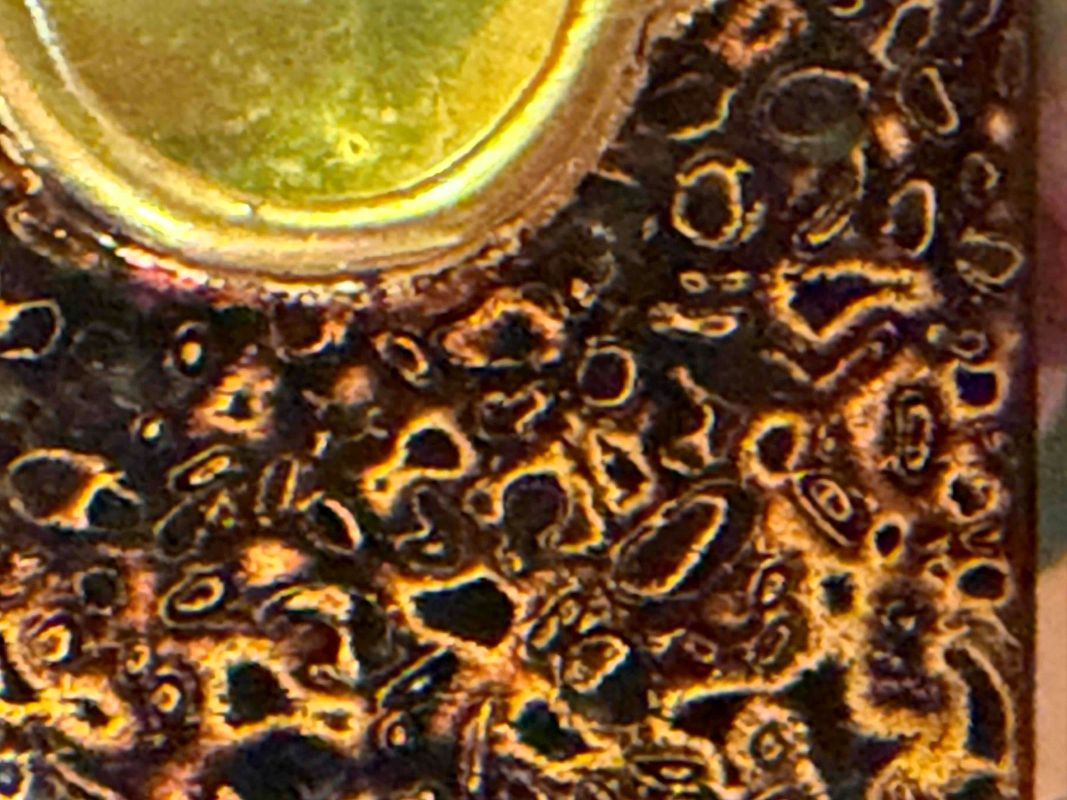
The base section is defined by "Mushikui-nuri," a traditional technique unique to Johana. By intentionally expressing the "beauty of decaying wood" through lacquer undulations, this technique embodies respect for the laws of nature and the spirit of Wabi-Sabi.
[Overall View] Placed at the bottom of the altar, it firmly supports the brilliant upper sections, giving the entire piece an unwavering sense of stability and dignity.
[Close-up] Complex patterns emerge by burnishing multiple layers of lacquer. These unique expressions, which can never be replicated, are born from the artisan's intuition and decades of experience.
Noble Radiance: The "Shu-senmoku" Pattern
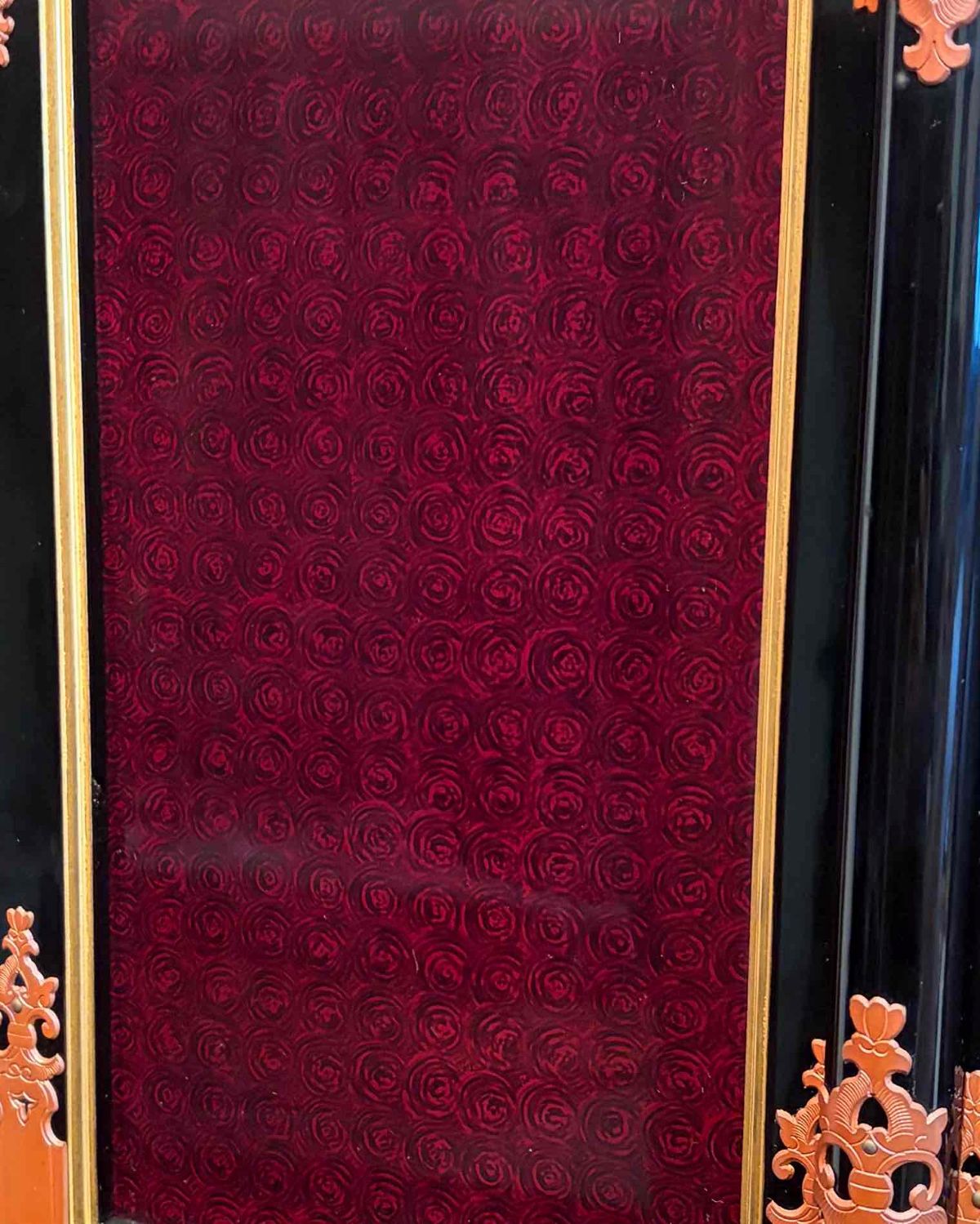
"Shu-senmoku," applied to the upper doors (Uwado), is a decorative technique symbolizing the elegance of Johana altars. On a base of vivid vermilion lacquer, unique circular patterns resembling silver coins or scales are brought to life. These patterns are hand-drawn by artisans who judge the exact moment the lacquer dries, creating a shimmering effect that shifts with the angle of light. It resonates with the golden hues of the gold leaf, bringing a festive and prestigious atmosphere to the entire altar.
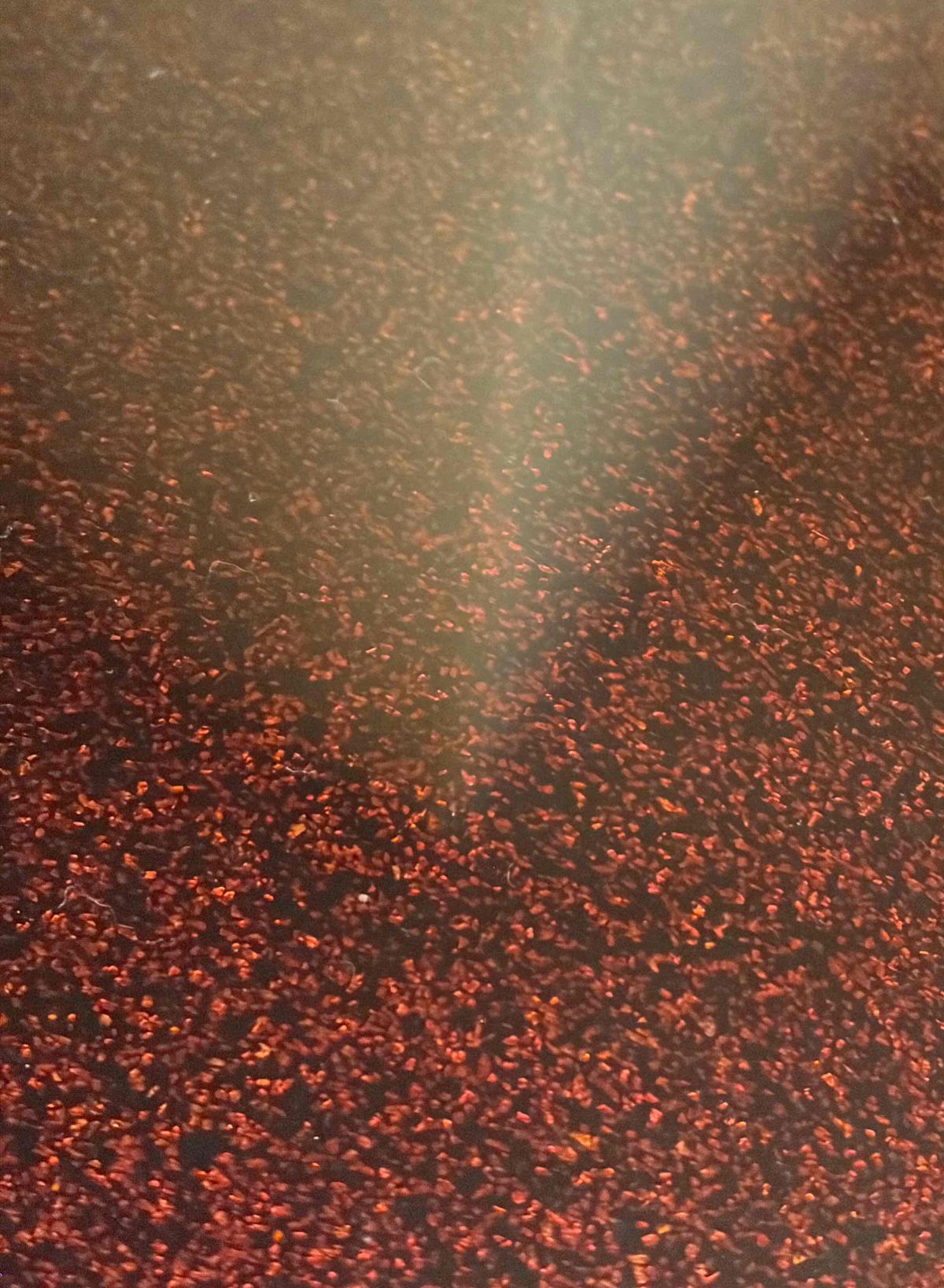
Quiet Stardust Brilliance: "Kin-sunako-nuri"
"Kin-sunako" is a luxurious technique where finely crushed pure gold powder is sown onto the lacquer surface, followed by more layers of lacquer and meticulous burnishing. Unlike uniform gold leaf, the gold particles shimmer through the deep layers of lacquer, emitting a profound glow like stardust in the night sky. While understated, its golden texture seems to well up from within when hit by light, filling the viewer's heart with quiet awe.
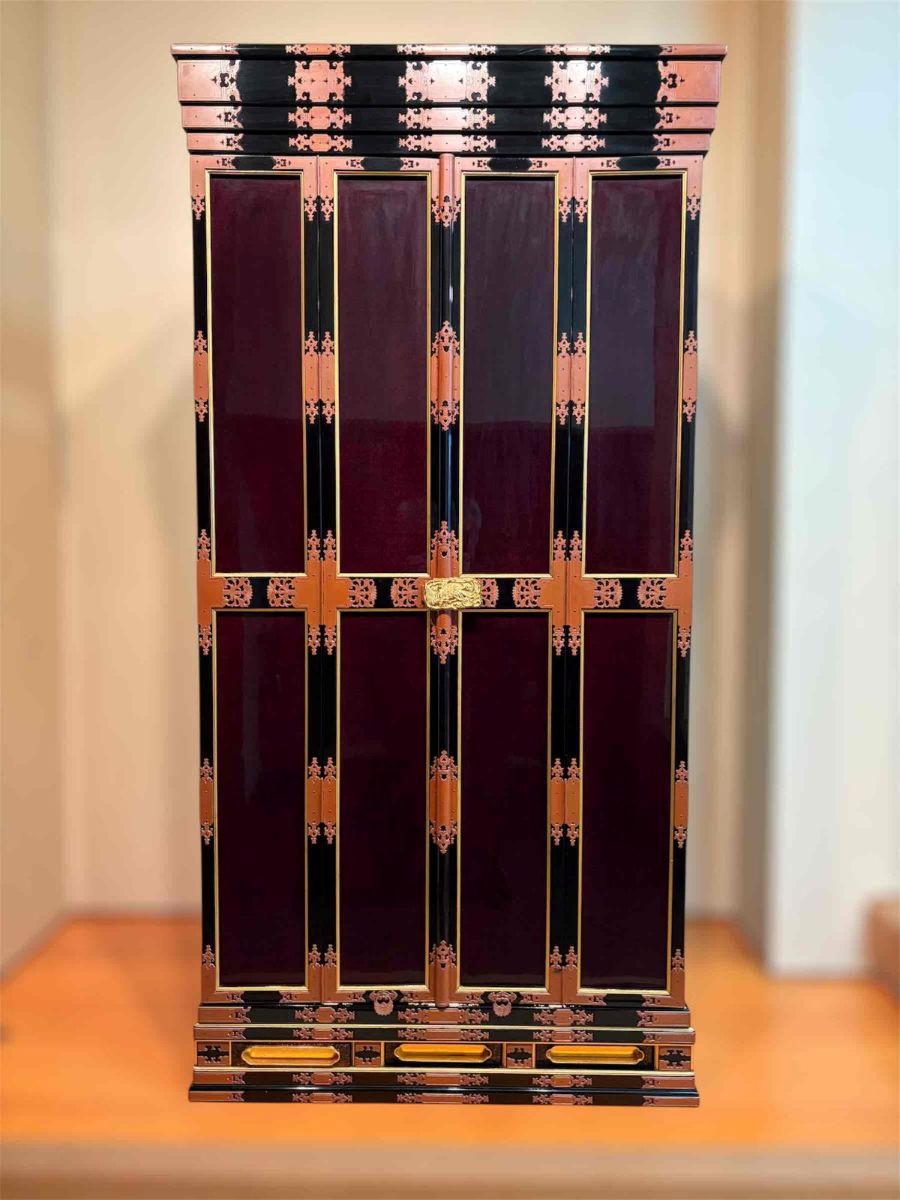
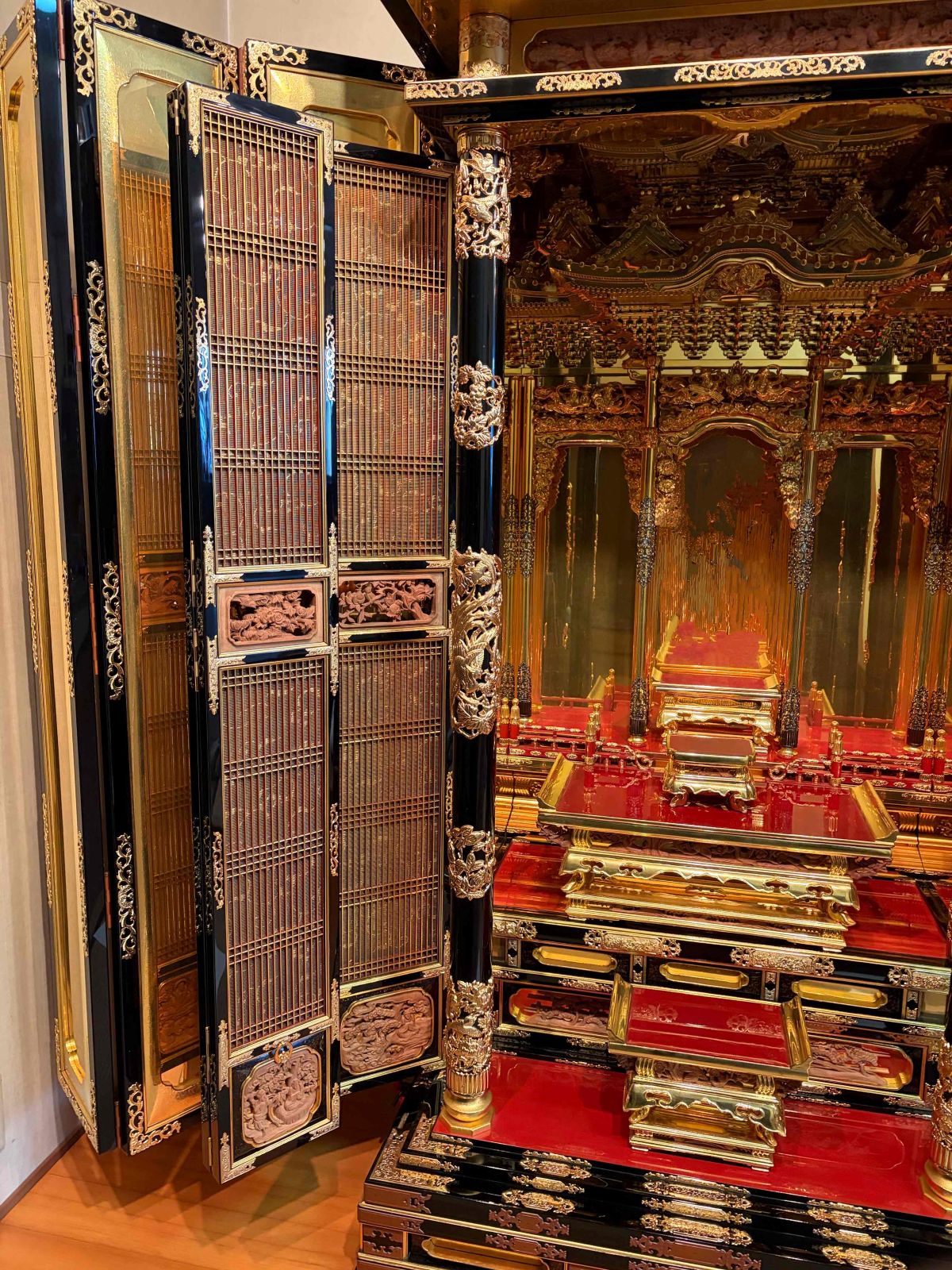
Temple-like Majesty: "Three-Way Opening"
This is a luxurious specification where not only the front but also both sides open. In this massive "Size 150" altar, light enters from three sides, beautifully illuminating every corner of the internal sandalwood carvings.
[Storage View] To enshrine your ancestors, the altar features a secure double-structure with both outer and inner doors.
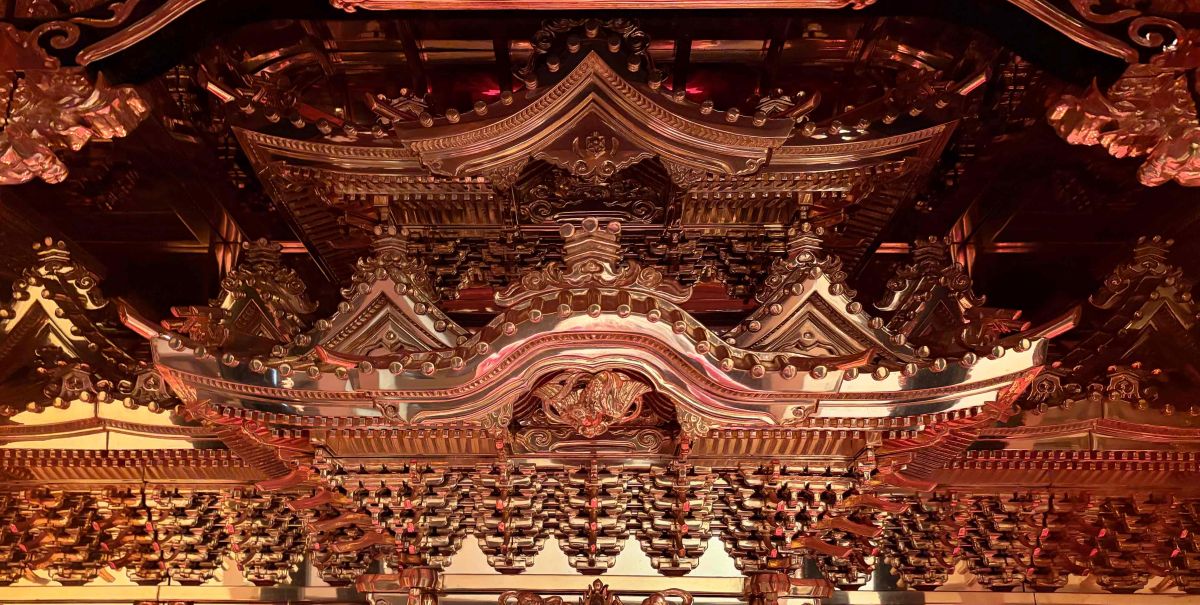
Exquisite Architectural Beauty: Capturing Temple Grandeur
The roof (Guden) at the top of the altar is the essence of architectural craftsmanship, exquisitely recreating the main hall of a temple—a symbol of the Pure Land. Multiple layers of rafters (Taruki) and complex "Masugumi" (bracket sets) are assembled by hand without a single nail. Supporting the vast space of this Size 150 three-way altar, this roof overwhelms with its three-dimensionality and solemnity, truly befitting the roof of a sacred sanctuary.
Experience this Supreme Masterpiece with Your Own Eyes.
A rare work of art that can never be created again, infused with all the skills of master artisans.
It is carefully displayed and preserved at Onishi Butsudan Honten. We invite you to experience its power in person, along with detailed explanations from our staff.